Philip Carey
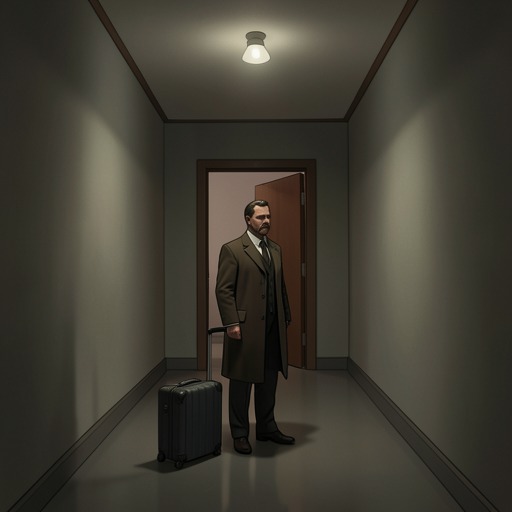
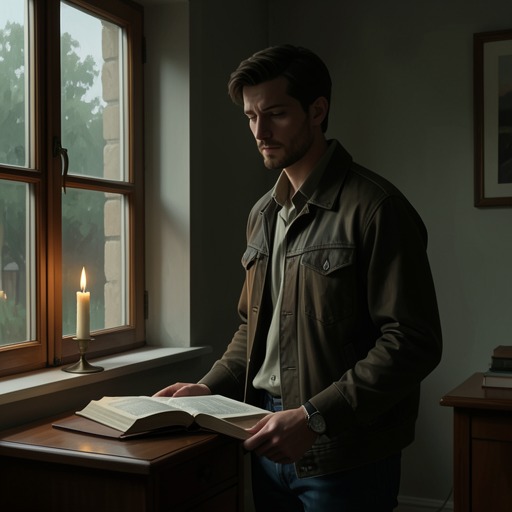
Of Human BondagePhilip Carey’s life is a series of attempted beginnings: each time he expects a vocation or a relationship to give his existence shape, experience unsettles that expectation. Born with a club-foot, he encounters ridicule and self-consciousness early; as an adult he moves from school to Heidelberg, London, and Paris, abandoning one future after another before qualifying as a doctor. His significance lies not in a single triumph but in the gradual alteration of what he seeks: certainty gives way to experience, and abstract ambition to a more grounded engagement with other people’s lives.
Identity and Early Experience
Philip’s early bond with his mother is recalled through a quiet scene of physical tenderness. Awakened and led to her bedside, he nestles beside her as she kisses his eyes and presses him close. The scene establishes an intimacy that precedes his later self-consciousness about his body and his difficulty finding a secure place among others.
At school, his club-foot becomes a public mark that other boys use to exclude and humiliate him. During a game of Pig in the Middle, Philip cannot catch the runners because of his limp. One boy imitates his awkward run; the others join in, circling him and laughing. The episode is not merely an individual insult: the group turns a physical difference into a spectacle, and Philip’s bodily limitation becomes a social one, shaping how he understands himself in company.
The novel presents self-consciousness as something acquired through experience rather than given whole at birth. Philip’s heightened awareness of himself as separate from others grows out of painful encounters, including the schoolyard mockery. His club-foot remains a practical and emotional fact throughout his life, but its meaning varies with the people and settings around him. Norah, for instance, responds to his sensitivity about the deformity with tenderness, while clinical work later places him among patients whose lives cannot be reduced to visible conditions.
School, Freedom, and the Loss of Faith
By the time Philip enters the Sixth, he has lost his ambition and hates school. He feels each morning as the beginning of another day of drudgery, resents being made to repeat what he already understands, and yearns for freedom. The restrictions irritate him not because he can demonstrate that they are unreasonable, but because they are restrictions imposed from outside. His desire to leave thus carries both a wish for self-determination and an impatience with the ordinary demands of discipline.
When he finally walks away, the freedom he imagined does not arrive as uncomplicated exhilaration. He feels depressed and doubts his decision, yet cannot bring himself to return to the headmaster and admit that he would stay. The choice exposes a recurring difficulty: Philip can make a decisive break, but once he has made it, pride and uncertainty prevent an easy reversal. His departure opens a new life while leaving him unsure whether he has chosen well.
Philip arrives in Heidelberg in May, greeted by blue skies and leafy avenues, but also by shyness and the discomfort of entering a house among strangers. His new surroundings offer exhilaration without immediately supplying belonging. In the course of his religious questioning, he recognizes that he has ceased to believe. He reads books that might support skepticism, but comes to understand that they confirm rather than cause the change: faith has not answered to his temperament. The realization frightens him because he imagines that his decision may affect his whole life and even his eternal fate, yet reflection makes him more convinced. Religious belief, once imposed as a framework for his future, no longer governs it.
Work, Class, and the Search for a Vocation
Philip’s first adult employment in accountancy sharpens his sense of the difference between a prescribed path and a life he can accept. He tells his uncle that he took the position because it was the only chance he saw of getting to London; he hates both the city and the work and refuses to return to it. His uncle’s proposed allowance is conditional on his remaining at the office, so Philip understands that leaving before his inheritance becomes available will have financial consequences. The dispute grows bitter as he struggles to escape a career chosen under constraint.
His understanding of class is formed through comparisons that complicate his assumptions. Remembering his uncle’s proverb that it takes three generations to make a gentleman, Philip connects gentility to inherited standing, public-school education, and attendance at Oxford or Cambridge. Yet an encounter with Watson, whose education includes Winchester and Oxford, shows Philip how status can be performed through condescension: Watson’s manner becomes more patronizing as he learns about Philip’s own schooling. The episode makes education and social rank feel less like neutral credentials than measures through which people judge one another.
Philip’s London life is also marked by loneliness. At the theatre, he notices that other people have friends; envy sometimes turns to hatred because they seem happy while he is miserable. He distrusts attempts at conversation from strangers, then returns across the bridge to Waterloo and to unheated rooms that have become unbearably cheerless. In the evenings he can be too lonely to read and sits looking into the fire. The city offers crowds and entertainment, but neither guarantees companionship.
A week away gives Philip the resolve to abandon accountancy and study art in Paris. He nonetheless plans to stay at the office until his year is complete, partly to avoid appearing unreasonable, and uses time obtained by pretending to attend examination lectures to visit the National Gallery and read about Paris and painting. His plans collide with his uncle’s refusal to support him unless he remains at work. Philip’s mother sees him off at the station, trying to hold back tears while he is restless and eager to depart. His escape is therefore neither cost-free nor purely solitary: it depends on family conflict and leaves sorrow behind.
In Paris, Philip measures his ambitions against the labor and outcomes of other aspiring artists. Fanny Price’s effort troubles him because she works sincerely and believes in her ability, yet her work does not make that confidence persuasive. Philip compares her heroic exertion with the triviality of what she attempts and recognizes how little self-belief alone can establish artistic merit. The encounter becomes part of his own crisis: he suspects that he experiences art differently from people whose response to a picture is immediate and instinctive.
He comes to believe that artists may be driven into such complete absorption in their work that life itself slips by, subordinated to art. His own impulse is almost the opposite: he wants to live through varied experiences and draw what emotion he can from each moment, rather than chiefly represent life. After deciding to ask Foinet directly whether he should continue studying, Philip ultimately leaves painting. On the last day of September, with sixteen hundred pounds and his club-foot, he sets out for London for a third start, now intending to become a doctor.
Medicine and Contact with Other Lives
Medical training first gives Philip a kind of immediate engagement that his previous pursuits did not. In the dissecting-room, the acrid smell in the passage becomes intelligible when he enters; the scene marks his arrival in a world where knowledge is bound to physical bodies and practical work. More consequentially, his duties in the out-patients’ department expose him to a wide range of people and circumstances. The waiting patients include men and women of different ages, some tattered and dirty, some more respectably dressed, all gathered with bottles and medicines in hand.
The clinical setting is not presented as simple benevolence. Philip observes that men commonly suffer ailments associated with excessive alcohol use, while women’s complaints often result from inadequate nourishment. Yet he finds the work absorbing, and the directness of contact with patients gives him a sense of power he had not experienced in Paris. Faces, speech, gait, and occupation become elements through which he learns to observe, ask questions, and distinguish what patients say from what they withhold. He finds that he is less shy with them than with other people and can put them at ease. His interest is not described as conventional sympathy; he feels at home with them without needing to adopt a posture of superiority.
This practical fit surprises him. After spending his artistic years attending to colour, tone, and values, he finds human beings themselves compelling material for attention. He wonders whether he may be cut out to be a doctor, as if he has stumbled upon the one occupation for which he is suited. The question remains tentative, but it signals a change: professional purpose emerges not from an ideal image of success but from the texture of work and his response to actual patients.
His later hospital appointment as an in-patients’ clerk lasts six months. The work is less varied and less intimate than the out-patients’ department, but he gains knowledge in the wards, writes up cases, performs tests, and becomes acquainted with patients and nurses. He is pleased that patients welcome his attendance, though he does not claim deep fellow-feeling for their suffering. The distinction matters: Philip’s growing competence and ease do not depend on presenting himself as emotionally selfless.
After a break in his curriculum, he returns to St. Luke’s Hospital and answers the secretary’s questions with deliberate vagueness, no longer embarrassed by the need to protect his private affairs. He registers for a clerkship in the ward for women’s ailments, then takes on district duties that require him to attend, on average, three confinements a day. At night, a porter may wake him; he walks through deserted streets to reach patients’ homes. This work exposes him to the economic and emotional conditions surrounding childbirth, including the varied responses of husbands awaiting a baby.
One patient dies despite the efforts of those attending her. Her young husband stands by the cheap iron bed in bewilderment, while the midwife sobs; the scene gives Philip a direct encounter with death that no abstract professional ambition can contain. At the beginning of August, he passes his final surgery examination and receives his diploma. Seven years after entering the hospital, and nearly thirty years old, he descends the stairs of the Royal College of Surgeons holding the roll that qualifies him to practise. The satisfaction is hard-won: medicine has become a vocation through sustained experience rather than a sudden guarantee of certainty.
Intimacy, Loss, and an Unsettled Ending
Philip’s relationships expose the difference between romantic ideal and lived attachment. His early affair with Miss Wilkinson begins partly as an anticipated adventure: he has absorbed literary descriptions of love but finds neither the expected rush of passion nor the idealized beauty he had imagined. He tells himself that an intrigue would be satisfying and takes pride in the idea of conquest. Later, his experience of falling in love is less an intellectual choice than a recognition that arrives against his expectations: away from Mildred he is unhappy, and the thought of touching and kissing her leads him to admit what has happened to him.
His relationship with Norah offers a contrasting kind of intimacy. They become lovers while remaining friends, and her affection takes a domestic form: she fusses over his health and linen, and her tenderness responds in part to his sensitivity about his deformity. She likes his laughter and his company, while Philip finds a happiness that seems solid and durable. When Mildred returns, however, he faces the harm his renewed passion will do to Norah. Before visiting her, he imagines her anger and anguish, recognizes that she has not deserved the pain he is about to inflict, and feels dread at having to end the relationship. His gratitude for her love cannot prevent him from leaving it behind.
Philip’s later encounter with Mildred shows how sharply passion can fade. Remembering the anguish he suffered for her, he finds that it has become only a memory: he no longer loves her, feels sorry for her, and is glad to be free. The change does not erase what the attachment cost him; instead, it makes the earlier intensity difficult for him to understand. His emotional history is marked by reversals in which desire once treated as compelling comes to seem remote.
Economic insecurity also interrupts the future Philip tries to arrange. Hoping to finish his hospital course, he watches shares fall and fears that selling will cost him nearly three hundred and fifty pounds, leaving only eighty. He has to choose between accepting the loss and holding on in the hope of recovering enough to continue. The investment gamble turns financial calculation into an immediate threat to his training and demonstrates how precarious his hard-won medical future remains.
When the strain overwhelms him, Philip seeks out Thorpe Athelny’s household. The children rush down to let him in and kiss his pale, anxious face; their affection moves him so much that he lingers on the stairs to recover. He is close to tears, and eventually tells Athelny what has happened, despite fearing that he will be judged a fool. This scene gives practical form to a network of care: where Philip’s own shame and anxiety isolate him, the family’s welcome makes it possible for him to speak and accept help.
His first wages do not bring the pride he might have expected. Eighteen shillings remain from the month’s pay; he gives fifteen to Mrs. Athelny toward his debt, but she accepts only half a sovereign. The smallness of the sum emphasizes how little security work has yet provided. It also places Philip’s independence beside his continued reliance on others, without turning that reliance into a simple failure.
Thinking of Cronshaw and the Persian rug, Philip arrives at the conclusion that life has no meaning. The answer is not a newly discovered universal purpose: life has arisen through material conditions and will end under others, while humanity is not the climax of creation. The rug’s answer changes the terms of his search. Instead of waiting for an external design to certify his choices, he can treat experience itself as what is available to be lived and made into a personal pattern.
After qualifying, Philip receives an unexpected offer of partnership from Doctor South. He is astonished that a newly qualified man should be offered such a position and understands that Doctor South has taken a liking to him, though he would not say so aloud. The offer supplies a professional future just as his private life presents another complication. Philip had planned to ask Sally to marry him; when he learns of the obstacle before him, he is appalled at his own foolishness and sees the orderly future he had pursued becoming difficult to attain. Yet his final response is not a return to calculation: he tells Sally that he does not want to leave her. The ending leaves him choosing attachment in the present, with his future unsettled rather than secured by a neat resolution.
Narrative Significance
Philip’s successive careers make vocation a question of lived fit rather than destiny. School, accountancy, art, and medicine each promise a structure for the future, but he discovers their value only through experience—and sometimes discovers their limits through disappointment. His most durable change is not that uncertainty disappears; it is that he becomes more capable of acting without pretending that a single ideal will settle the meaning of his life.
The club-foot links physical difference to social judgment without exhausting Philip’s identity. At school, others turn his limp into public ridicule; in his intimacy with Norah, it is met with tenderness; as a medical student, he encounters bodies and suffering as part of the ordinary substance of clinical work. Likewise, his relationship with patients complicates the boundary between observer and observed: he learns to ask questions and identify concealment, yet finds himself at home with people whom he does not claim to pity from above.
By the conclusion, Philip’s life remains open. He has a medical qualification and a possible partnership, but neither professional recognition nor philosophical insight resolves the demands of love and the pull of an immediate choice. His story’s pattern is therefore not a straight ascent to mastery. It is a succession of beginnings in which loss, labor, companionship, and chance revise what a meaningful life can be.